Agentic Commerce Is Coming: What Retailers Need to Know Now
Agentic commerce is changing the rules of ecommerce. From machine-readable product catalogues and agent-driven checkout to delegated payments and new fraud challenges, businesses need to prepare for a world where AI agents play an active role in purchasing decisions.

For most of the last 20 years, ecommerce teams have treated bots as something to detect, block, throttle or challenge.
That made sense. A normal customer browsed, compared, hesitated, added something to a basket, maybe abandoned it, then came back later. A suspicious customer landed directly on a checkout endpoint, moved too quickly, provided very little behavioural signal and often came from somewhere that looked more like a server farm than a smartphone.
Agentic commerce changes that assumption.
In the next phase of online commerce, the bot may not be attacking your store. It may be the customer.
That sounds simple, but it has consequences across almost every part of ecommerce: product data, discovery, checkout, payments, fraud, pricing, customer support and the internal systems retailers use to run their business.
For merchants, the immediate challenge is not to chase every AI announcement. It is to understand what is real, what is emerging and what needs to be prepared for now.
What is agentic commerce?
Agentic commerce is the use of AI agents to help customers discover, evaluate and purchase products or services.
A simple version might look like a customer asking an AI assistant:
Find me a full outfit for hiking in France in July, within this budget, that works with these shoes.
The agent does not simply return a list of links. It understands the customer’s request, compares products, filters by budget, checks availability, considers sizing and shipping, and may ultimately complete the purchase.
That last step is where things get interesting.
Traditional ecommerce assumes the customer is present throughout the journey. They search, click, browse, choose, enter details and confirm payment. Agentic commerce introduces a delegated buyer: software acting with the customer’s permission, within a defined set of constraints.
That creates a new kind of customer journey, and in some cases, a new kind of customer.
One label, several moving parts
Part of the confusion around agentic commerce is that several related ideas are arriving at once.
The first is agent-driven shopping. This is about helping AI agents discover products, understand merchant catalogues, compare options, manage baskets and complete retail purchases. This is where protocols such as Universal Commerce Protocol become relevant. Google describes UCP as an “open standard for agentic commerce across the shopping journey”. The idea is to present a baseline standard for agents to connect and transact with merchants in a consistent way, across storefronts.
The second is agentic payments. This is about giving an authorised agent a safe, scoped way to pay on behalf of a customer or business. Stripe’s shared payment tokens are one example. The customer grants permission, the agent receives a token with limited capability (locked to one merchant, maximum value, and so on), and the merchant can complete the payment without receiving the customer’s original card details.
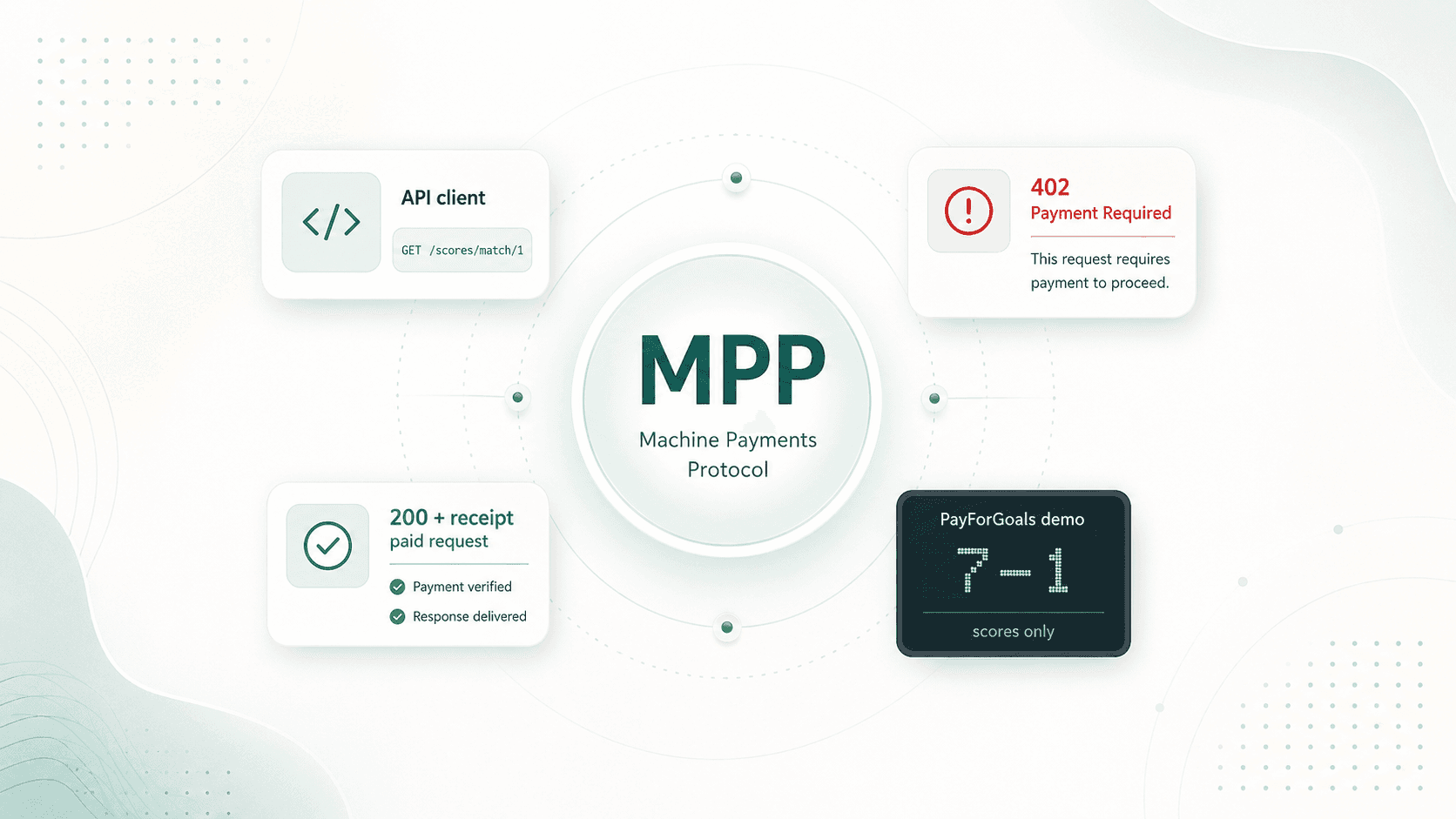
The third is machine payments, which is a more technical subset of the same broad shift. This is where agents, services or APIs coordinate paid access programmatically. Stripe’s Machine Payments Protocol is designed for this kind of machine-to-machine payment flow: a client requests a paid resource, receives a payment challenge, authorises payment, retries the request and receives the resource. These ideas are connected, but they are not identical.
A retailer preparing for agentic commerce does not need to solve all of them at once. It does need to understand which part of the puzzle matters for its business.
Agents need merchants they can understand
The first practical question for most retailers is simple:
Can your products be understood by machines?
A human can work around messy product data. They can squint at a vague description, infer whether two items might work together, read between the lines of a returns policy, or decide whether a photo tells them enough.
Agents are less forgiving.
If an AI agent is choosing a product on behalf of a customer, it needs structured, reliable information - sizes, materials, colours, availability, delivery windows, return policies - all encoded in a way which a machine can understand and reliably interpret for its’ human operator..
For many retailers, this is where the hard work starts. Agentic commerce is not only a checkout problem. It is a data hygiene problem.
Messy catalogues, inconsistent attributes, incomplete stock information and unclear policies are already bad for human customers. In an agentic world, they may make a merchant harder to discover, harder to recommend or harder to trust.
The merchants best placed for agentic commerce will be the ones whose product data can be confidently interpreted by systems they do not control.
Checkout may move away from your website
Retailers are used to thinking of their website as the centre of the ecommerce journey.
Agentic commerce weakens that assumption.
If customers increasingly discover and buy through AI assistants, search experiences, messaging interfaces or embedded commerce surfaces, the merchant website may no longer be the only place where the buying decision happens.
The website still matters. It remains the source of truth for products, stock, pricing, order management, fulfilment and customer service. But the storefront becomes one of several possible surfaces, rather than the only meaningful path to purchase.
This means that retailers need to think about whether their ecommerce platform can expose clean catalogue data, accept agent-driven checkout flows, handle delegated payment credentials and reconcile orders that may have started outside the traditional website journey.
They also need to think carefully about brand. If an agent is doing the comparison, the merchant may have fewer opportunities to persuade the customer through traditional design, copy and merchandising. The quality and structure of the underlying data becomes part of the brand experience.
No pressure, then.
Payments get more complicated
For a normal ecommerce purchase, the payment flow is familiar. A customer chooses a product, enters or selects a payment method, confirms the purchase and receives an order confirmation.
Agentic commerce introduces new questions.
Who authorised the purchase? What exactly did the customer consent to? Was the agent allowed to substitute one product for another? Was it allowed to exceed the original budget? Can the customer dispute the transaction if the agent technically followed the rules, but made a poor choice?
In the near term, most agentic payment flows are likely to remain tightly scoped. A customer authorises a specific purchase, a price range, a merchant, a product category or a set of constraints. This is sensible, It limits risk, and makes the model easier for customers, merchants and payment providers to trust.
But the direction of travel is clear. Payments will increasingly need to support delegated intent, not just direct human action.
For merchants, this means payment architecture matters. Systems need to be able to handle new types of credentials, richer metadata, clearer authorisation records and more nuanced fraud decisions.
Microtransactions and AI-native pricing
Agentic commerce is not only about retail shopping.
It also matters for AI-native services, where agents may consume APIs, tools, data or compute on behalf of a user or business.
This is where traditional payment models start to creak. If a service charges fractions of a cent per API call, token, or generated output, card payments may be too expensive or too slow at the individual transaction level. Aggregated monthly billing is common, but that creates risk: usage can spike, free trials can be abused, and inference costs can outrun revenue.
We have all seen the funny screenshots where someone persuades a fast-food chatbot to forget the menu and write a React app instead. That sort of thing is amusing until the same pattern is applied to a service with real inference costs behind it.
This is one reason stablecoins and low-cost settlement rails are getting renewed attention. Strip away the hype, and there is a real question underneath:
How do you charge for AI-native services when the unit economics are too small, too fast-moving or too risky for traditional payment models?
That question will not matter to every retailer immediately. But for platforms, marketplaces, SaaS businesses and AI-enabled services, it is already becoming practical rather than theoretical.
Fraud signals are changing
Fraud is one of the hardest parts of agentic commerce.
Historically, bot-like behaviour has been suspicious. No browsing pattern. A single fast request. A data centre IP. Little device history. These were all useful signals.
In an agentic commerce world, a legitimate transaction may look exactly like that.
That creates a difficult problem for merchants. Block good agents and you lose revenue. Allow bad agents and you lose money.
The old fraud signals will not disappear, but they will need to be interpreted differently. Merchants will need better context: what the customer authorised, what the agent was allowed to do, which surface initiated the purchase, whether the payment credential was appropriately scoped, and whether the behaviour fits the authorised intent.
This will become especially important for low-margin businesses, where a small increase in fraud, trial abuse or unpaid AI usage can wipe out the economics of a product.
The same automation that creates new buying experiences also makes abuse cheaper to attempt.
The regulatory picture is uneven
The US is moving quickly on agentic commerce, agent wallets and stablecoin-enabled payment flows. Adoption elsewhere is likely to be slower, partly because financial regulation varies significantly by market.
That is not automatically a bad thing. Regulation matters. Consumer protection matters, with the stability it traditionally brings.
But there is a difference between moving carefully and moving so slowly that the next generation of commerce infrastructure is built somewhere else.
At the time of writing, some of the most advanced agentic commerce payment capabilities remain gated by geography, eligibility or private preview access. Stripe’s machine payments documentation, for example, notes that customers can use stablecoins globally, but only US businesses can currently accept stablecoin payments through Stripe. Its fiat Machine Payments Protocol flow using shared payment tokens is also listed as available to businesses with a US legal entity.
That distinction matters. There is a lot of hype in the market, and not every demo is a deployable production flow for every business in every region.
For merchants outside the US, the right approach is to prepare without pretending the whole future has already arrived. Clean the data. Understand the protocols. Review the payment architecture. Watch the regulatory environment. Be ready to move when the practical barriers come down.
What retailers should do now
Most retailers do not need to rebuild their ecommerce stack tomorrow, but they should start preparing.
Start with catalogue readiness. Product data should be structured, consistent and complete. If an agent needed to understand your products without reading your website like a human, could it?
Then look at policy clarity. Delivery, returns, substitutions, warranties, regional restrictions and customer support policies need to be clear enough for machines to interpret and for customers to trust.
Next, review payment readiness. Retailers should understand how their payment provider is approaching agentic commerce, delegated credentials, shared payment tokens, fraud tooling and future support for new rails.
Finally, revisit fraud readiness. Existing fraud rules should be reviewed through the lens of agent-driven behaviour. A good transaction may soon look more automated than today’s systems expect.
The opportunity is real. So, to be fair, is the confusion.
Separating hype from reality
Agentic commerce will not replace every ecommerce journey overnight. Customers will still browse websites, compare products, read reviews and make decisions themselves.
But the direction is clear. More discovery will happen through agents. More purchases will be delegated. More systems will need to talk to each other directly. More merchants will need to make their products legible to machines.
The businesses that prepare now will not just be ready for a new checkout flow. They will be ready for a new kind of customer.
At Square1, we help businesses design, build and integrate complex payment and commerce systems, with deep experience across Stripe Payments, Billing, Terminal, Connect and financial services use cases.
If you are starting to explore agentic commerce, preparing your ecommerce flow for agent-driven shopping, or simply trying to separate what is real today from what is still hype, we would be happy to help.
The agents may not be shopping everywhere yet. But when they arrive, you will want them to understand what you sell.